Note on mergers and acquisitions activity in the contract hire market

One of the joys of being an independent consultant in the contract hire/fleet/asset finance space is that my work so varied. I’ve been doing this for a decade and during that time I don’t think there is any part of a lessor’s balance sheet or profit and loss account I haven’t been engaged to work on.

In the last six months, however, things have changed. I have been approached nine times by hedge funds or corporate financiers looking to buy (or arrange the purchase of) contract hire companies. I’m only one person, so this is by no means a scientifically-surveyed cross-section of activity in this market but if my experience is anything to go by it’s clear that there is more interest in this sector now than at any time since I joined it 32 years ago.

I have asked them all why they’re so interested in this market and by and large they all tell the same story.

They are attracted to the returns in the sector, though they realise these are cyclical. (They find themselves talking to me because they want to understand the risks in the market, particularly maintenance budget and residual value risk).

They also like the fact that some of the leasing companies are huge, requiring large amounts of capital and debt. Big deals mean commensurately big returns for any corporate finance house that can close one of these deals, and it seems that hedge funds are attracted to big deals too.

This is a niche market within a niche market, so I’ve wanted to find out how they were attracted to this sector, and almost without exception they’ve said they saw their competitors doing deals in this space and decided to check it out for themselves.

And it helps of course that they know there are some very willing sellers around at the moment.

Funding an acquisition seems to be the number one problem at the moment, and a lot of very clever people are working hard to solve it. They are looking at securitisation with some enthusiasm, because it offers the potential of near-unlimited funding so long as the resultant product is sufficiently flexible to accommodate real-life issues such as vehicle write-offs, early terminations and lease extensions.

Syndication is also being discussed: putting together a syndicate of investors and funders who together would be able to acquire and finance the largest of these businesses, or several large players at once.

There is no question in my mind that there are going to be more deals done in this market. The UK contract hire market is never a dull place. Over the next year or two I suspect it’s going to be even more interesting.

Colin Tourick


Fleet News interviews Colin Tourick

What has been your biggest achievement in your current role?

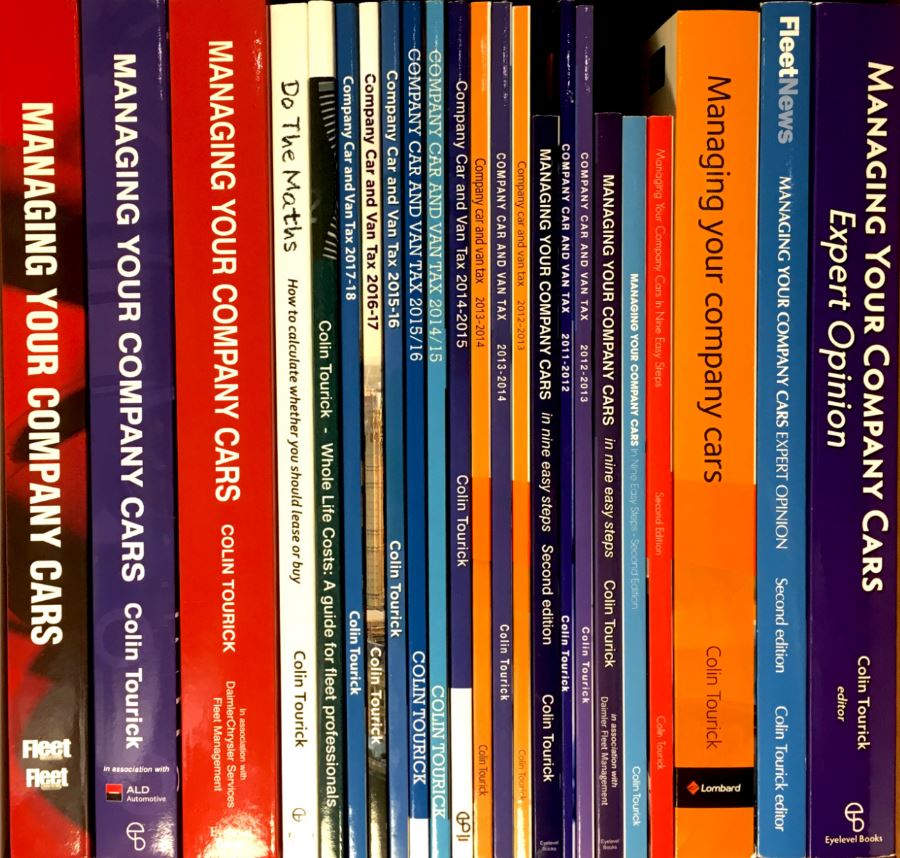
I’ve spent 30 years helping fleet managers reduce costs and risk, and my mother would say my biggest achievement is producing five books under the ‘Managing Your Company Cars’ title (“my son the author”).

I’m also very proud of the work I’ve done for the last six years helping leasing companies improve the way they do their pricing.

And in the last year or so we’ve introduced those pricing methodologies to a number of companies outside the fleet sector.

It’s interesting that the things we’ve learned about pricing in the fleet leasing market are also of value to food manufacturers, electrical goods retailers, parts distributors and service companies.

Continues here: http://www.fleetnews.co.uk/feature/the-last-word-colin-tourick/39762/


Contract hire issues

Published in Fleet World Confidential in October 2010


Contract hire; periods and mileages


Contract hire is by far the most popular leasing product. You can normally choose whatever lease period you require, though many contract hire companies will refuse to lease you a vehicle for less than twelve months or more than five years.

It was once normal for companies to replace their vehicles after two years. Today 66% of vehicles are leased for three years and 26% for four. Every time there is an economic downturn, fleet managers push out their leases a little longer. And with good reason; depreciation is heaviest in year one so the longer the lease the lower the average annual depreciation, and therefore the lower the rental. Yes, maintenance costs grow steadily as cars get older, but for most cars this saving in depreciation more than compensates for the extra maintenance costs.

Continue reading

Should you be extending your leases?

Published in Fleet News October 2010

This remains a hotly-debated topic amongst fleet managers. Leasing companies report that in mid 2008 around 18% of car leases went into extension. This increased to 27% in late 2009 and has since fallen to 21%.

The average lease extension period increased from 6.6 months in mid 2008 to a peak of 8.9 months and has now fallen back to 7.5 months.

Clearly, the peak is now over but many companies are still extending their leases.  So, should you be joining them? That depends.

Continue reading

How to buy … fleet finance

Published in Fleet World, April 2010

It is remarkably easy to buy fleet finance. You call one of the many suppliers of fleet finance – banks, finance and leasing companies or contract hire companies – tell them what you want, compare their prices and services and choose the one that seems offers what you want and the best combination of price and quality.

The hard bit, in fact, is to work out what you want. There are many different ways to finance your company cars, including outright purchase, contract hire, operating lease, contract purchase, finance lease, hire purchase, conditional sale, credit sale (as part of an employee car ownership scheme), salary sacrifice, loans, bank overdrafts and cash, and if you want to release cash from your fleet you could consider a sale and lease back too.

Broadly, these products fall into two camps: those that help you buy a vehicle and those where you pay for its use then hand it back. Continue reading

How to Buy … Contract Hire

Published in Fleet World, January 2010

So, your business isn’t cash-rich, you don’t want your employees to have the hassle of sourcing their new cars or selling their used ones, you don’t want to speculate on the value of used cars and you like the idea of having a pretty tax-efficient form of finance. So you opt for contract hire. It can’t be a bad decision: vast numbers of other businesses do the same.

Continue reading

Should fleet managers be worried about the proposed lease accounting changes?

Published in Asset Finance Europe, November 2009

For decades, the accounting rules (SSAP21, then IAS17) have classified lease as either finance leases or operating leases (contract hire).  Finance leases were like loans; the hirer was committed to pay back the lessor’s total investment. Operating leases were like long term rentals; the lessor kept the residual value risk and needed to sell the asset to recover its investment in full. So finance leases were shown as liabilities on lessees’ balance sheet whereas operating leases were accounted for ‘off balance sheet’; the lease payments being expensed in the profit and loss account and the future rental liability shown as a note to the accounts.

Investment analysts have never much liked these classifications. Continue reading

It’s not all doom and gloom out there.

Last October I started thinking about writing a new book on Best Practice in fleet management.

I knew I wouldn’t just be able to sit at a keyboard and start typing; I’d have to get out there and talk to some subject-matter experts about what they were doing. Best Practice is certainly out there but I would have to go out and look for it.

I made a list of the people I wanted to talk to. The list was remarkably long. I certainly needed to talk to contract hire companies, accountants and so on but I also wanted to talk to some fleet managers. Some are doing great things but too often their stories don’t get heard. I realised that if I was going to do this project justice I would have to talk to an awful lot of people first.

Continue reading